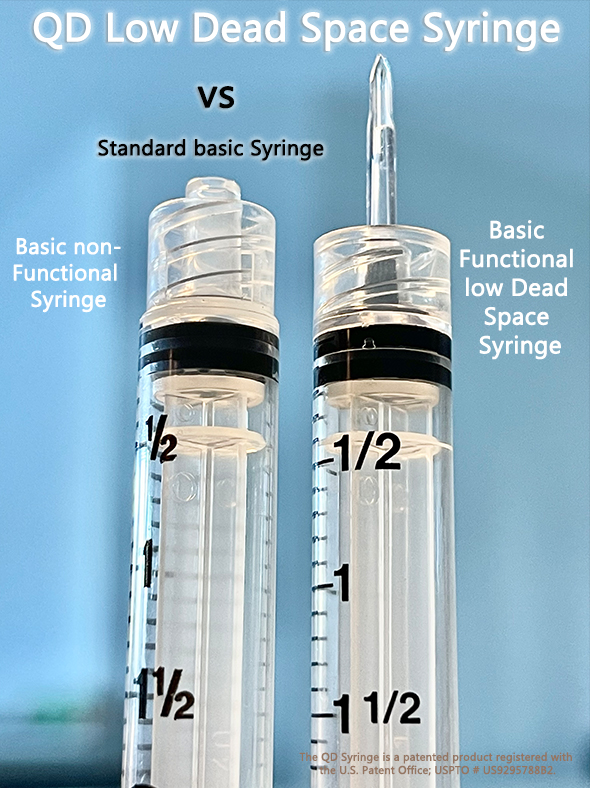
For more than half a century, the basic disposable syringe has remained remarkably unchanged. While medicine, pharmaceuticals, robotics, and medical technology have advanced dramatically, the syringe used to prepare and deliver lifesaving medications still relies on a design philosophy developed decades ago.
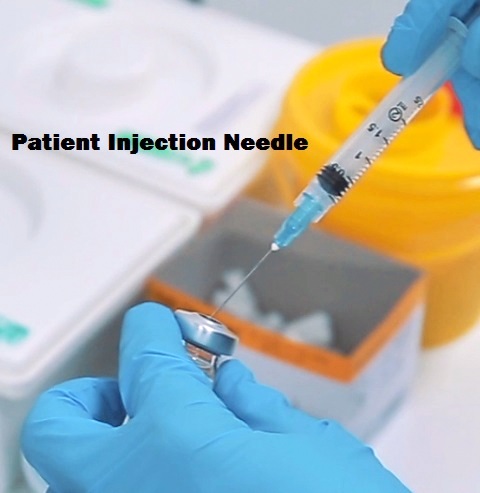
Every injectable medication begins with one critical step: safely transferring medication from its vial into a syringe. Unfortunately, this preparation process introduces multiple opportunities for medication waste, workflow inefficiency, contamination, needle damage, and unnecessary safety risks.
The QD Syringe was engineered from the ground up to rethink this entire process.
Medication Preparation Should Be the First Priority
Before medication can be safely delivered to a patient, it must first be completely and efficiently recovered from its vial.
An ideal syringe should:
- Recover virtually all of the medication from the vial.
- Access medication trapped beneath recessed rubber stoppers.
- Reduce medication waste.
- Simplify workflow.
- Minimize manipulation during medication preparation.
Traditional syringes were never specifically designed to accomplish these objectives. Instead, clinicians often rely on separate steel fill needles or use the patient’s injection needle to withdraw medication.
Neither approach is ideal.
Why Patient Injection Needles Should Not Be Used for Medication Preparation
One of the most common practices throughout healthcare is using the same hypodermic needle to both withdraw medication from a vial and inject the patient.
Although common, this practice has several disadvantages.
Each time a steel needle punctures a rubber stopper, microscopic deformation of the needle tip can occur. Even though this damage is not visible to the naked eye, studies have demonstrated that needle tips can become dulled after vial penetration.
This means the needle that ultimately enters the patient’s skin may no longer be at its sharpest.
In addition, repeated penetration of rubber stoppers can remove portions of the specialized silicone lubrication applied during manufacturing, potentially increasing insertion resistance during injection.
The QD Syringe approaches this differently.
Medication preparation and patient injection become two separate functions.
The injection needle is attached only after medication preparation has been completed, meaning the steel needle has never been used on anything except the patient.
Eliminating the Need for Steel Fill Needles
Steel fill needles have become standard equipment throughout healthcare.
However, every additional sharp instrument introduced into the medication preparation process increases complexity.
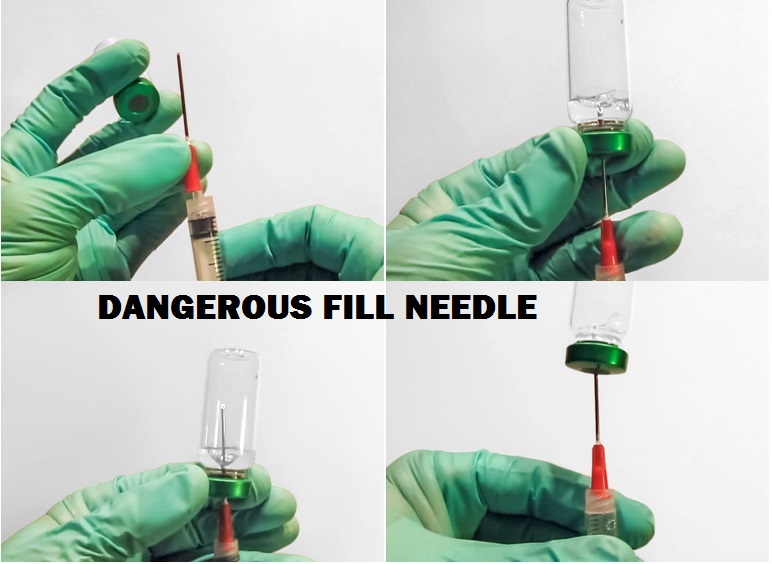
Separate fill needles create additional:
- Sharps handling
- Sharps disposal
- Inventory requirements
- Workflow steps
- Opportunities for accidental needle-stick injuries
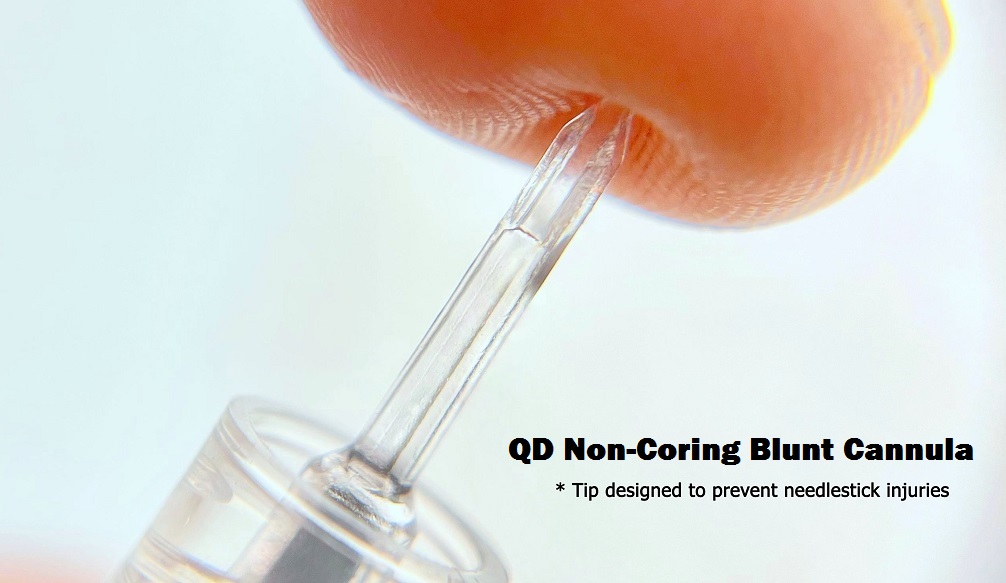
The QD Syringe eliminates the need for a separate steel fill needle by incorporating an integrated blunt medication preparation cannula directly into the syringe itself.
Immediately after opening the sterile package, the syringe is ready to access compatible medication vials.
No additional fill device is required.
Reducing the Risk of Rubber Coring
Another important consideration during medication preparation is rubber stopper coring.
When steel needles penetrate vial stoppers, small fragments of rubber may occasionally be shaved from the stopper surface. These microscopic particles can enter the medication solution.
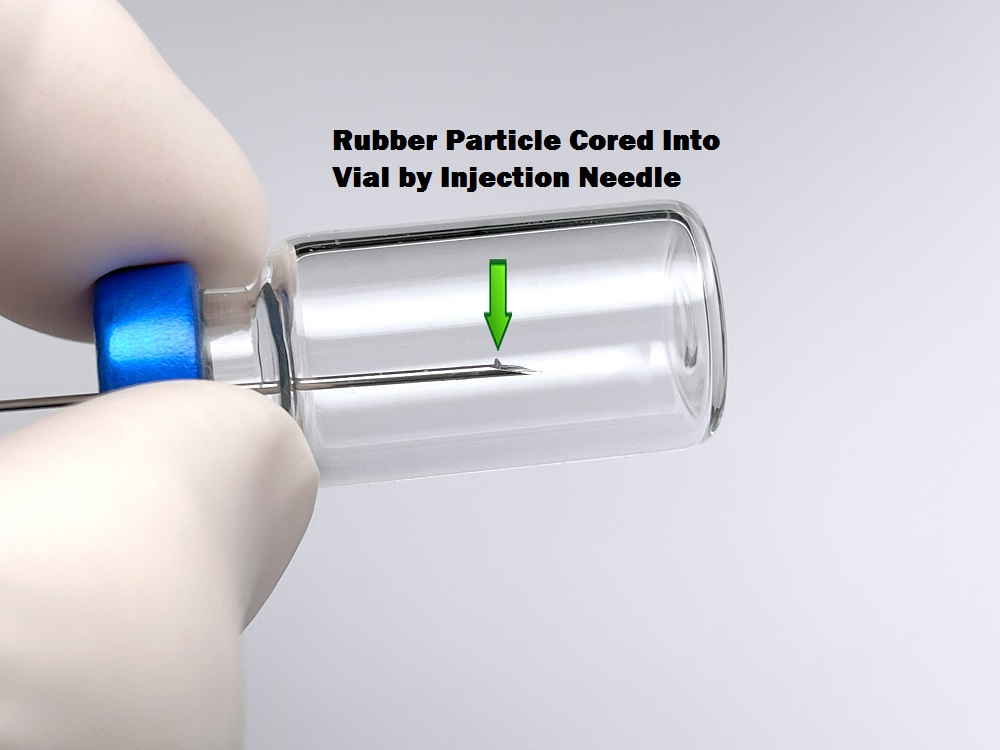
Published studies have documented coring events associated with conventional steel needles under certain conditions.
The QD integrated cannula was specifically engineered as a non-coring medication preparation device. Rather than relying on a traditional beveled steel needle for medication withdrawal, its geometry was designed to minimize coring while providing efficient medication access.
Complete Medication Recovery
Many injectable medications are extremely expensive.
Every remaining microliter left inside a vial represents medication that cannot be delivered to the patient.
Traditional steel draw needles frequently require repeated repositioning, tilting, rotating, and “chasing” medication hidden beneath thick rubber stoppers or recessed vial designs.
The QD Syringe was engineered differently.
Its integrated draw-down cannula incorporates strategically positioned bilateral fluid channels that allow medication to flow efficiently into the syringe while the cannula remains at its stopping point.
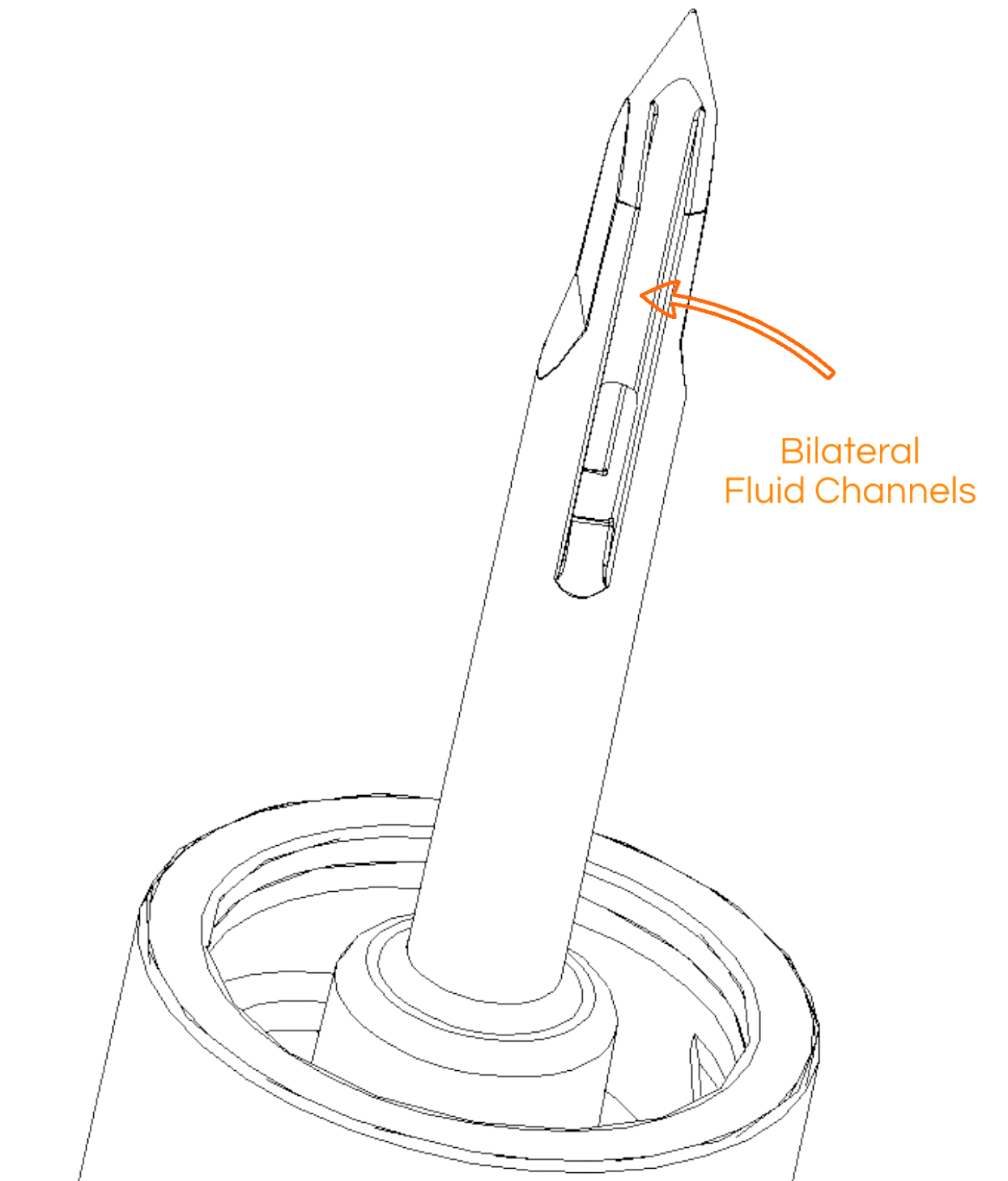
Instead of repeatedly manipulating the needle throughout the vial, medication preparation becomes a smooth, continuous motion.
The objective is simple:
Recover as much medication as possible while reducing unnecessary manipulation.
Low Dead Space Medication Delivery
Recovering medication from the vial is only half of the equation.
The medication must also be delivered efficiently.
Many detachable needle systems retain medication within the hub after the plunger has been fully depressed. This residual volume, commonly known as dead space, contributes to preventable medication waste.
The QD Syringe incorporates its own dedicated low dead-space mating injection hub, reducing residual medication while preserving the flexibility of detachable needles.
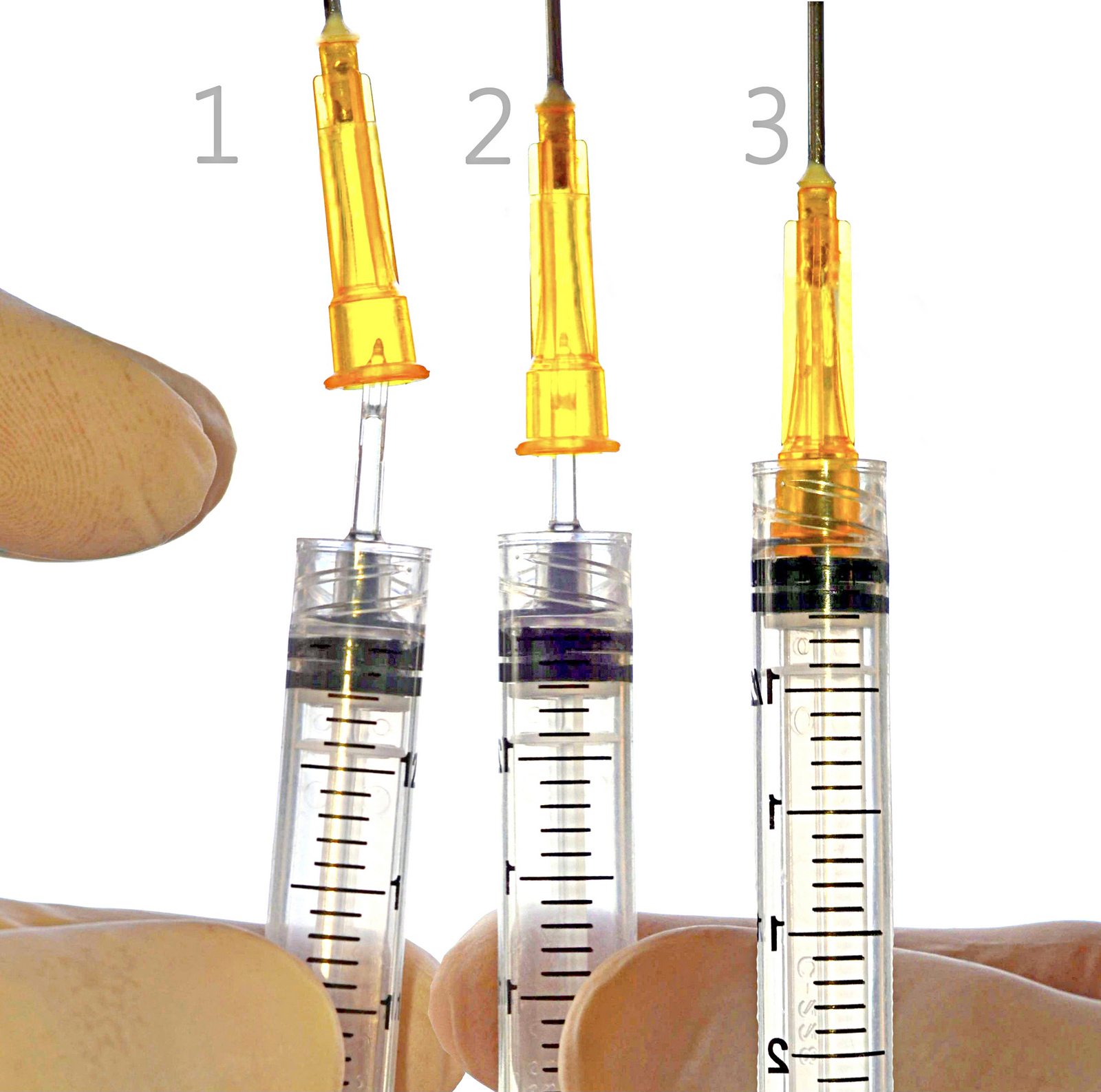
The result is a syringe platform designed to maximize medication recovery from beginning to end.
A Functional One-Piece Syringe Platform
The QD Syringe represents a fundamentally different philosophy of syringe design.
Instead of asking clinicians to assemble multiple components before medication preparation can begin, the QD Syringe integrates medication preparation directly into the syringe itself.
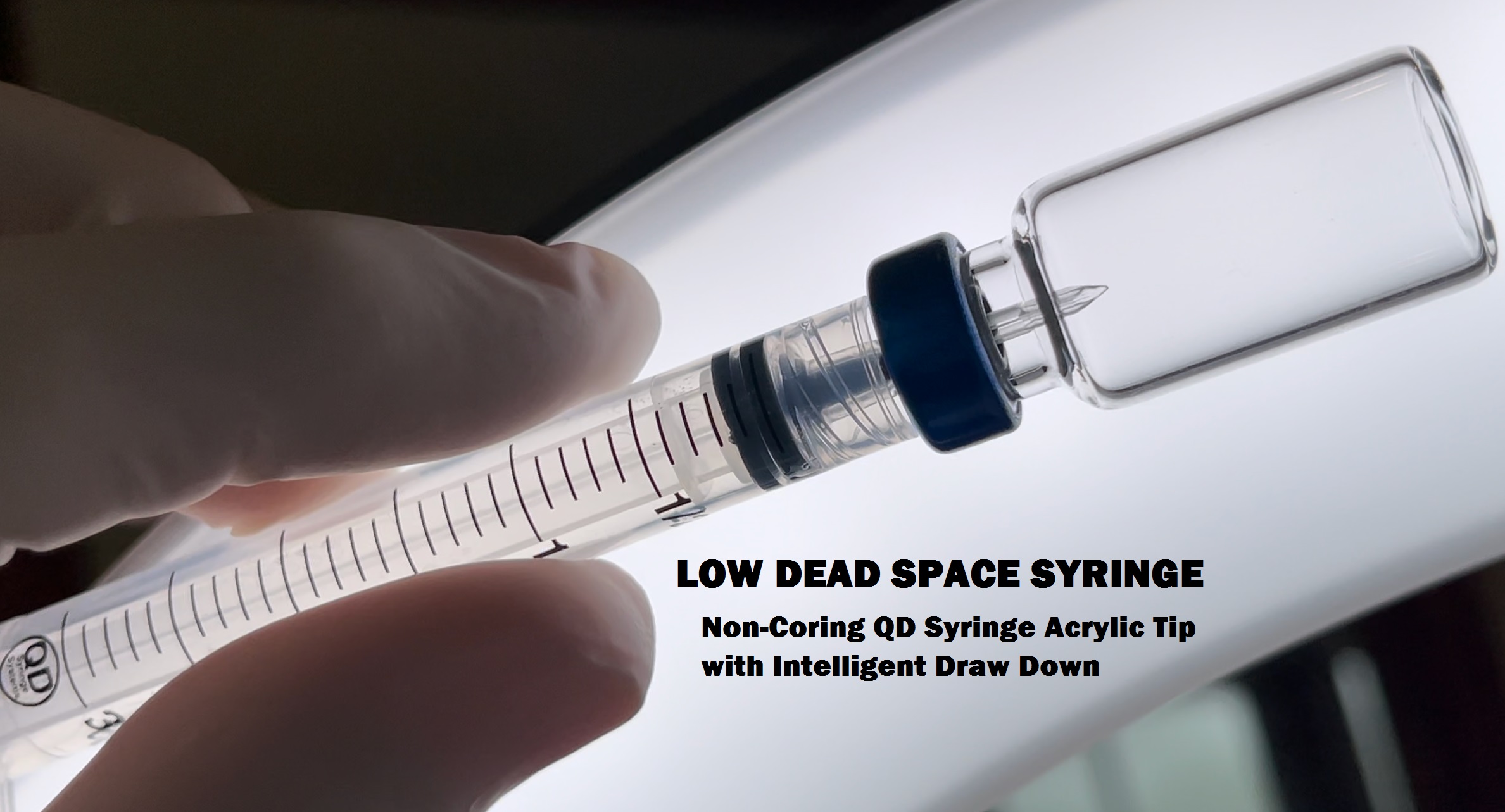
Its platform includes:
- An integrated non-coring blunt cannula.
- Bilateral medication flow channels.
- Immediate vial access.
- Simplified medication preparation.
- Reduced dependency on separate steel fill needles.
- A dedicated low dead-space injection hub.
- Detachable injection needles that remain unused until patient administration.
Each component has been engineered to perform a specific function while working together as a complete medication delivery platform.
The Next Generation of Disposable Syringes
Healthcare continues to demand greater efficiency, improved safety, lower medication waste, and simplified workflows.
The disposable syringe should evolve to meet those expectations.
The QD Syringe was developed to become more than another syringe.
It was designed to become a functional medication preparation platform—one capable of recovering more medication, reducing unnecessary workflow, minimizing sharps exposure, preserving the integrity of the patient injection needle, and delivering medication through a low dead-space system.
After more than 65 years of largely unchanged syringe design, the QD Syringe represents a new way of thinking about one of medicine’s most frequently used devices.
The future of medication preparation doesn’t begin with another accessory. It begins with a functional syringe.
Learn more about the next generation of medication delivery technology at: